
Drainage and ditch work
Water against a foundation, a drive that washes out, a ditch that stopped carrying. Fixing it starts with deciding where the water is allowed to go.
What this actually involves
Drainage and ditch work, in plain terms
Nearly every job on this site arrives as a water problem wearing a different name. Somebody calls about a driveway, a soft lawn, a wet basement wall or a shed sitting in a puddle, and underneath all four is the same question: where does the water that lands on this property currently go, and where should it go instead.
Answering it needs somebody standing on the ground, because it depends on things no photograph shows — how the land falls, what the soil is, where the neighbouring ground drains, and whether the ditch or road culvert downhill can actually take what you send it. Moving a problem onto somebody else’s property is not solving it.
What is included
The list
- Surface regrading and positive fall
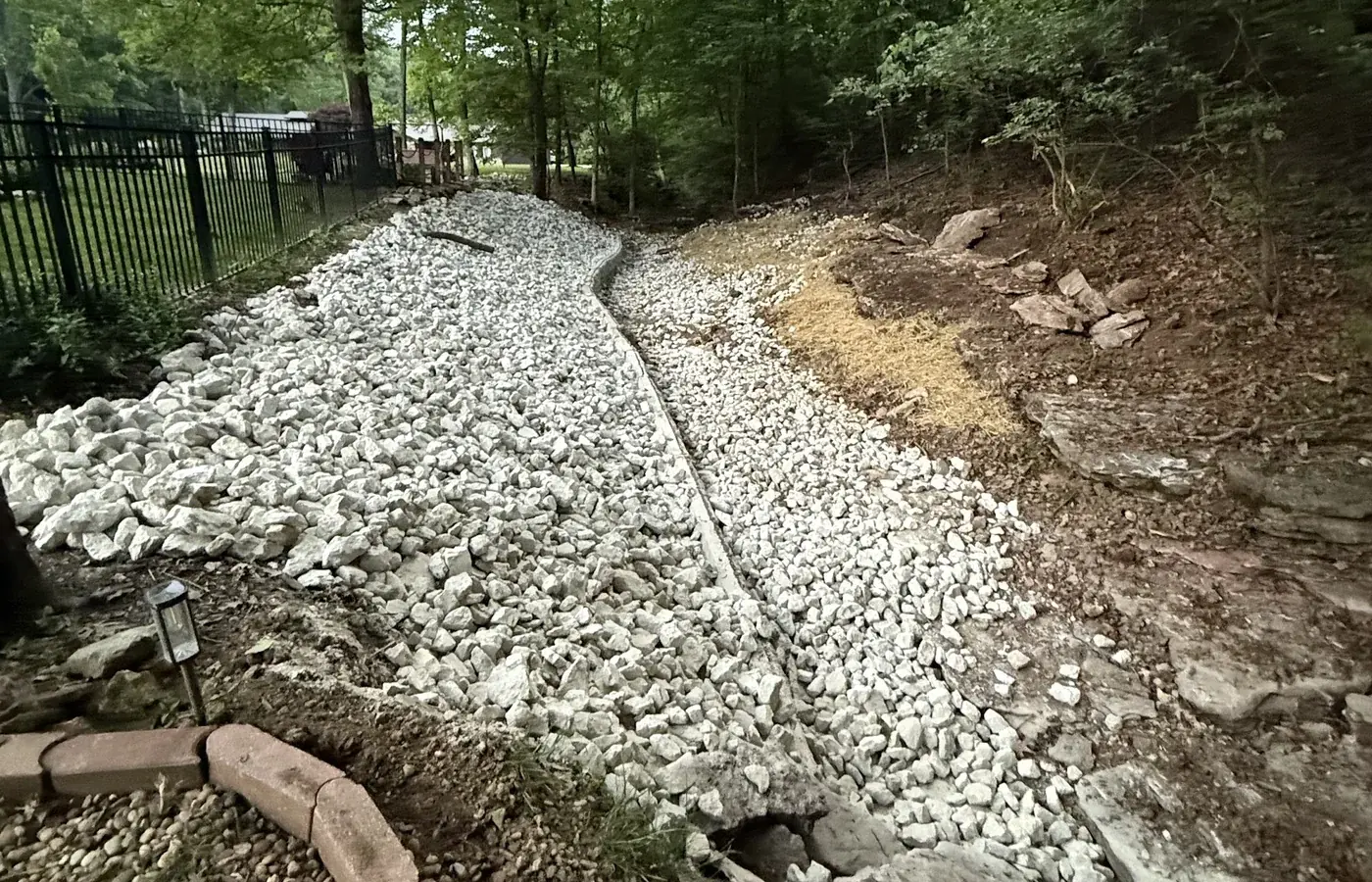
- Swales and rock-lined runs
- Ditch cleaning and reshaping
- French drains and downspout runs
- Culverts and driveway crossings
- Trench digging
When people call about this
Reasons this ends up on the list
- Water standing in the same spot for days after rain
- A damp or wet wall on the uphill side of the house
- A driveway that rills or washes every storm
- A ditch that has silted up and no longer carries
- Soil or gravel washing onto a patio, drive or road
- A downspout discharging straight against the foundation
How it goes
From the walk-through to the finished ground
Follow the water
Where it starts, where it pools, and where it is legitimately allowed to end up. That walk is the estimate, and it is free.
Set the fall
The surface is cut and filled to a deliberate slope. Most drainage problems are a grading problem first and a pipe problem second, if at all.
Build the route
A swale, a rock-lined run, a French drain, a reshaped ditch or a culvert under the drive — whichever the ground actually calls for.
Stabilise the outfall
The end of a run matters as much as the start. Left raw, it undercuts itself and takes the new work with it.
Questions
Drainage and Ditch Work: common questions
Is this a drainage problem or a foundation problem?
Do I need a French drain?
Where is the water actually allowed to go?
Can you clean out an existing ditch?
The other five
Most jobs turn out to be two of these
Usually the thing you called about, plus the drainage problem underneath it. All five are run by the same owner with the same machines, so they happen in one visit rather than three.
Dirt Work & Grading
Cut and fill, yard regrading, driveway repair, drainage runs, swales, arena and pad footing, and trench digging.
See dirt work and gradingHardscaping
Rock and gravel placement, drainage runs, rip-rap, retaining and boulder walls, regraded banks, gravel drives and erosion control.
See hardscapingSite Prep
Topsoil strip and stockpile, cut to grade, subgrade compaction, base rock, building and shed pads, driveway and parking bases.
See site prepDemolition
Sheds, outbuildings and garages, decks, fences and porches, concrete slabs and old driveways, pool removal and backfill, interior tear-outs, haul-away and final grade.
See demolitionLand Clearing
Brush and scrub clearing, small timber and tree removal, fence line and property line clearing, overgrown lot reclamation, stump and root removal, debris hauled off site.
See land clearingWhere we work: Hillsboro · Arnold · Festus · Imperial · Fenton · De Soto · Pevely · High Ridge · Oakville · Mehlville · Sunset Hills · Kirkwood · Valley Park · Affton — and the rest of Jefferson County and St. Louis County. See the full service area.
Drainage and Ditch Work in Jefferson or St. Louis County?
Tell us the address and what the ground is doing. Bryer comes out, walks it with you and gives you a number — free, and with nothing attached to it. Repeat customers get 10% off.