Home Services What we do Dirt Work & Grading Drainage & Ditch Work Hardscaping Site Prep Demolition Land Clearing Gallery Service Area Where we work Hillsboro Festus De Soto Arnold Imperial Pevely High Ridge Fenton Oakville Mehlville Sunset Hills Kirkwood Valley Park Affton Contact
(314) 698-0887 Free Estimate

What we do

Five kinds of machine work out of Hillsboro, across Jefferson County and St. Louis County — dirt work and grading, site prep, hardscaping, demolition and land clearing. Seven days a week, 7 AM to 7 PM, and the estimate is free.

The five

Everything BR2 does with a machine

Five services, and most jobs turn out to need two of them — the thing you called about, plus the drainage problem underneath it. Each one has a page of its own.

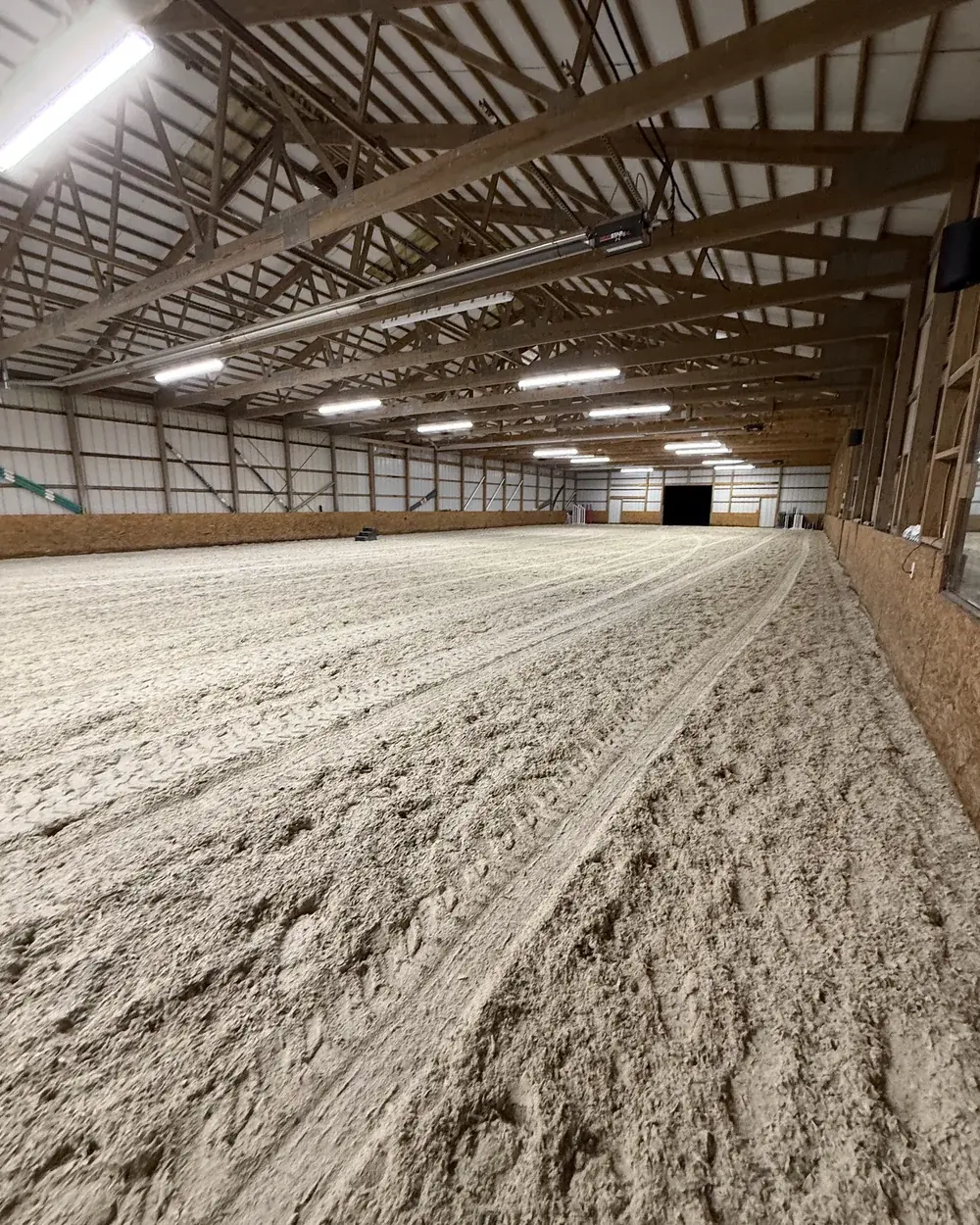
The interior of a large timber-framed riding arena, its sand footing freshly graded level with machine tracks still running down the length of it
Most requested

Dirt Work & Grading

Moving ground from where it is to where it needs to be, and leaving it at the level it was supposed to end at. Cut and fill, yard regrading, levelling for a shed or a slab, driveway repair, arena and paddock footing, and the ditch work that decides where the water goes next spring.

The photograph is an indoor arena with its footing graded flat end to end — not a glamorous job, and a good example of what dirt work actually is. Ground that drains wrong or sits at the wrong level does not announce itself until the first heavy rain, at which point it is somebody’s foundation problem.

  • Cut, fill and final grade
  • Yard levelling and regrading
  • Driveway repair and re-grading
  • Drainage runs, swales and ditch work
  • Arena, paddock and pad footing
  • Trench digging
More on dirt work and grading
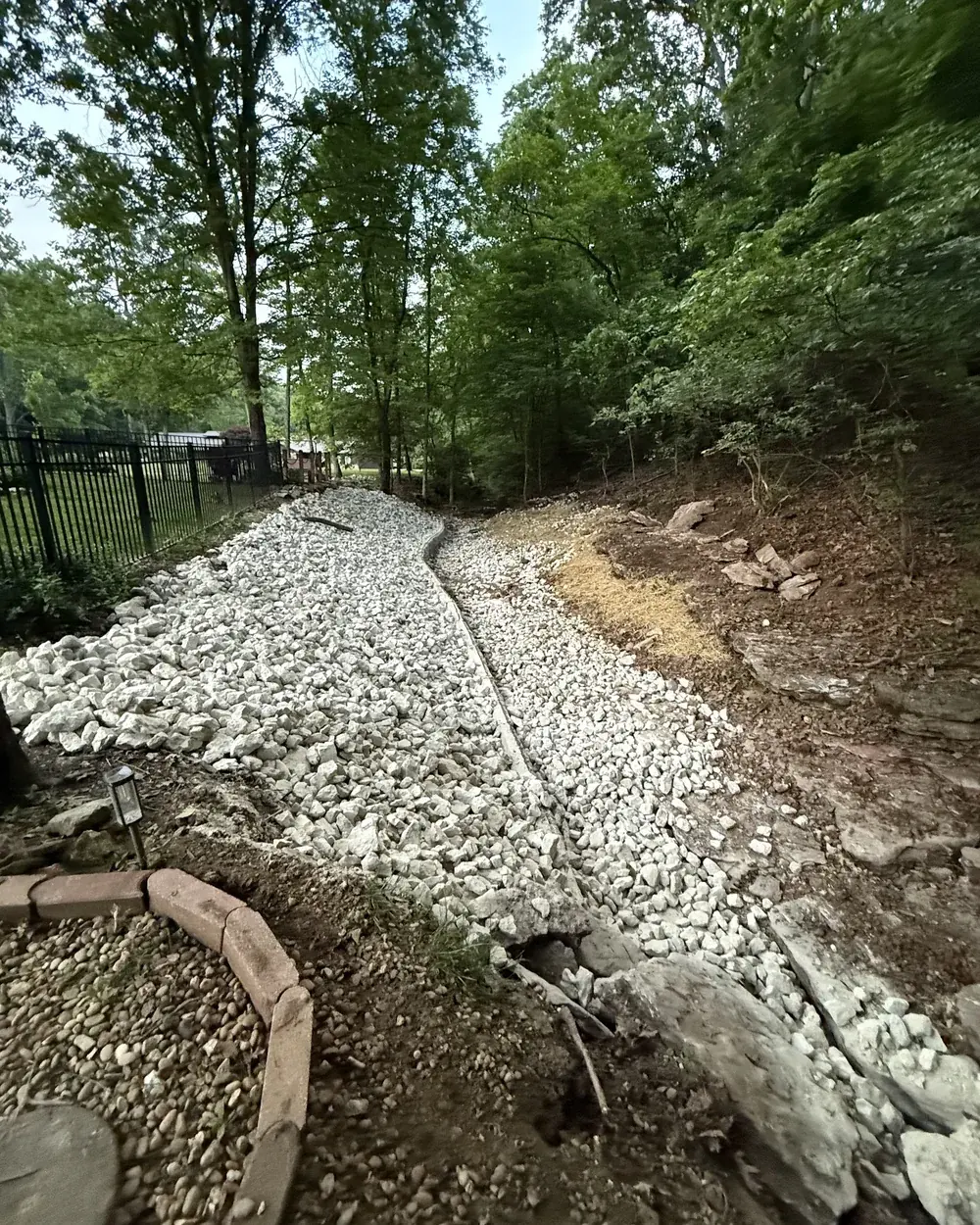
A finished drainage run of white rock cut along a wooded slope behind a black iron fence, with the regraded bank seeded beside it

Hardscaping

The heavy, permanent half of a yard — the part that needs a machine rather than a shovel. Rock, gravel, drainage runs, regraded banks and the stone that holds them in place.

The photograph is a drainage solution and a rebuilt slope on a wooded lot: a rock-lined run carrying water down and away from the fence line, with the bank behind it cut back, graded and seeded. It reads as landscaping now. It was excavation a fortnight earlier.

  • Rock and gravel placement
  • Drainage runs and rip-rap
  • Regraded and stabilised banks
  • Retaining and boulder walls
  • Gravel drives and parking areas
  • Erosion control on slopes
More on hardscaping
Most calls start here

Drainage & Ditch Work

The reason people call about the other five. Water against a foundation, a driveway that washes out every storm, a back corner that has been soft since spring, a ditch that has silted up and stopped carrying.

Drainage is not a product you buy, it is a decision about where water is allowed to go. Everything else — the swale, the rock, the pipe, the regrade — is just how that decision gets built.

  • Surface regrading and positive fall
  • Swales and rock-lined runs
  • Ditch cleaning and reshaping
  • French drains and downspout runs
  • Culverts and driveway crossings
  • Trench digging
More on drainage and ditch work

Site Prep

Getting a piece of ground ready for something to be built on it: a shed, a shop, a garage, an addition, a driveway, a patio. Strip the topsoil, cut to grade, compact the subgrade, get base rock in, and get water running away from the build instead of under it.

This is the stage nobody sees and everybody inherits. The concrete crew who follows you is the one who finds out whether the pad was compacted; the homeowner finds out three winters later. It is worth doing slowly.

  • Topsoil strip and stockpile
  • Cut to grade and compaction
  • Base rock placed and levelled
  • Building, shed and garage pads
  • Driveway and parking bases
  • Positive drainage away from the build
More on site prep

Demolition

Taking it down and taking it away. Sheds, outbuildings, decks, fences, slabs, old driveways, pools and interior tear-outs. Their own words for this one are the shortest: we even do demo work.

The part people underestimate is never the breaking — it is the hauling, and the fact that somebody has to leave the site flat, clear and safe afterwards. A demolition that ends in a pile is half a job.

  • Sheds, outbuildings and garages
  • Decks, fences and porches
  • Concrete slabs and old driveways
  • Pool removal and backfill
  • Interior tear-outs
  • Haul-away and final grade
More on demolition
Comes before everything

Land Clearing

Brush, scrub, small timber and years of overgrowth taken off a piece of ground so you can see what you actually own. One of the four reviews on this site is exactly this job — a property cleaned up over several long days in a record-heat summer.

Clearing is where most projects start, and it is the stage that tells you what the rest is going to involve: what the soil is, where it drains, how steep it really is under the brush, and what somebody buried in it in 1978.

  • Brush and scrub clearing
  • Small timber and tree removal
  • Fence line and property line clearing
  • Overgrown lot reclamation
  • Stump and root removal
  • Debris hauled off site
More on land clearing

The full list

Most of it arrives as a water problem

People rarely call an excavator because they want dirt moved. They call because something is wet, sinking, in the way, or about to be built on. These are the jobs behind the five headings above.

Water

  • Water sitting against a foundation
  • Driveways that wash out every storm
  • Ditches that stopped carrying
  • Yards that hold water for days
  • French drains and rock swales
  • Downspout and outfall runs

Ground

  • Uneven or sinking yards
  • Slopes that need cutting back
  • Fill brought in and compacted
  • Topsoil stripped and replaced
  • Gravel drives and pads
  • Erosion on a bank

Before a Build

  • Shed and shop pads
  • Garage and addition footprints
  • Driveway and parking bases
  • Patio and slab subgrade
  • Utility and trench work
  • Final grade before concrete

Clearing Out

  • Overgrown lots and fence lines
  • Brush, scrub and small timber
  • Old sheds, decks and slabs
  • Pools filled and removed
  • Stumps and root balls
  • Everything hauled away

How it works

From first call to final grade

STEP 01

Call, text or send the form

Tell us the address and roughly what needs doing. Call or text (314) 698-0887, or use the form on this site. We answer 7 AM to 7 PM, seven days a week. A rough description is plenty at this stage — nobody is expected to know their own cubic yards.

STEP 02

Bryer walks the ground with you

On site, not over the phone. What the soil is, whether there is rock under it, where the water goes now and where it should go instead — and the question that moves the number most: whether a machine and trailer can physically reach the work. Estimates are free.

STEP 03

You get the scope and the number before anything starts

Agreed up front: what is being moved, where it goes, what gets hauled off, and what the ground looks like when we leave. “We’ll see what we find” is what costs people money in this trade, so we would rather find it at the estimate.

STEP 04

Machine in, work done, site left clean

Access protected on the way in, the work done, spoil and debris hauled off rather than piled in a corner, and the ground left at grade. Two of our reviews mention the crew turning up when it said it would and working long days to finish.

Not sure which of these you need?

Most people are not, and it is usually two of them — the thing you called about, plus the drainage problem underneath it. Tell us what the ground looks like now and Bryer will come and work it out. Free either way, and repeat customers get 10% off.